VETERINARY NURSING: AN OVERVIEW OF CANCER IN SMALL ANIMALS
| RACE Approved Interactive For Veterinary Technicians/Nurses |
Course meets the requirements for 18 RACE hours of continuing education credit for veterinary technicians in jurisdictions which recognize AAVSB's RACE approval. However, participants should be aware that some boards have limitations on the number of hours accepted in certain categories and/or restrictions on certain methods of delivery.
RACE Subject Category: Medical; Delivery Method: Interactive Distance; Program Number 742217 .
This course does not require employment nor prior experience.
|
| Course Focus - Learning Objectives - Completion Requirements |
Veterinary Nursing: An Overview of Cancer in Small Animals is designed to provide a solid foundation in oncology.
Upon completion of the course, the student will be able to:
- compare and contrast normal cell structure with cancerous cell structure
- recognize common tumor characteristics
- compare and contrast benign and malignant tumors
- differentiate cancer causing viruses
- identify chemical, physical and hormonal factors associated with cancer
- assess immune system responses to cancer cells
- identify the process of carcinogenesis
- evaluate genetic mutations
- compare and contrast effective diagnostic imaging technologies
- evaluate effective sample acquisition methods, including aspirates, scrapings, swabs and imprints
- develop effective biopsy techniques
- identify paraneoplastic syndromes
- compare and contrast effective treatment options, including surgery, chemotherapy and radiation therapy
- implement effective safety and protective measures
- effectively assess and implement pain management and nutritional protocols for cancer patients
- assess and establish end-of-life measures for cancer patients and their owners
Completion requirements:
Instructor Graded Interactive Critical Thinking and Case Study Assignments: Designed to help the participant apply the newly learned skills and knowledge via implementation focused and patient based scenarios
Examinations: Must be submitted with a score of 80% or better, multiple attempts
Course Survey
A certificate of completion is provided.
|
| How Does the Enrollment Process Work? |
|
This course is designed to be as schedule friendly as possible as we understand it can be hard to fit interactive CE into an already busy life. Open enrollment allows students to enroll in this course at any time.
Once the course payment transaction has been submitted, we will receive a notification of enrollment. In addition, the student will be sent a couple of "heads up" emails. The payment receipt will be sent to the email address
designated
in the payment page of the shopping cart, by the person who paid.
There is a post-payment manual process we must complete in order to add the new student to the course.
Completing enrollments as quickly as
possible is a priority but it can take a full 24 hours, especially on weekends and holidays. Once fully enrolled. the student will be sent a course welcome email containing important information, including how to access and log into the course.
|
| Personal Completion Deadline |
|
This is an asynchronous course. Students are not expected to be logged into the course at any specific times as there are no real time lectures or requirements.
Students have 18 weeks from the date of payment to meet all completion requirements. The course welcome email will specify the student's personal completion deadline. If the student has not met the completion requirements by the deadline, they will be processed out of the course and graded as incomplete.
But What If Something Comes Up?
There are times when unforeseen situations interfere with a student's ability to complete by the deadline. In that case, an email to VetMedTeam, as soon as such a situation arises, will allow us to offer the best possible options.
|
| Technology Requirements |
|
Reading content within the course is provided via PDF therefore the ability to download files and open PDFs is required.
It is recommended that participants utilize a program such as MS Word to create, and save, their assignment submission to their computer. Then the information can be pasted into the assignment submission area.
|
| Participant Feedback |
|
When asked what aspects of the course liked best some responses were:
...My studies have not been focused on Oncology, therefore I learned the most from the initial assignments regarding the basics of cancer cells and the effects of these conditions. Sample collection techniques we're also very helpful as we obtain lesion samples almost on a daily basis.
...All of it was beneficial. I liked how it would get you to think outside of the box. It was very realistic to what I see in practice and I think a great beginning class for anyone who wants to further their career in oncology
...I enjoyed the material covered. Understanding more of the disease process and how the body responds to chemotherapy has helped me better communicate with clients.
...The more in-depth overview is what I was hoping for . The instructor was easy to contact and was very quick and helpful with any questions.
...I enjoyed learning about the specifics of certain cancers, learning about how patients initially present for certain cancers, learning about paraneoplastic syndrome
...The modules on differences between cancerous and normal cells on cytology, paraneoplastic syndromes, chemotherapy agents and treatment options as well as safety measures were most valuable. It deepens my knowledge in the common areas I deal with as an RVT and refreshed my prior knowledge.
...The fact that if a response was wrong or "incomplete" we were given ideas on how to improve our answer. That helps a lot with learning rather than just saying it is wrong.
...Kim gave great feedback and pointed out things that I completely wasn't thinking of at times. The case studies and module questions were all helpful in the learning process.
...I liked all the background information I received. Already working in oncology for several years, I am familiar with the different types of tumors, chemo safety, diagnostics and treatment. So I found the biology section about mutations, cell division and the immune system most beneficial.
...Website very easy to navigate, easy to keep track of progress. Excellent, prompt feedback from instructor.
...I liked the reading material. I learned a lot from reading the material, but i used the material and had discussions with my oncologists and doctors within my clinic and i feel like i learned more from that than the course itself.
...I really enjoyed the course instructor, Kim. She is very knowledgeable and pushes you to think outside of the box.
...I enjoyed the feed back from my instructor, helped my thinking process and understanding of wanted concept.
|
| Course Instructor |
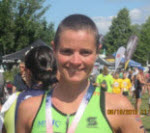 Kim Albin, LVT, VTS (Oncology) Kim Albin, LVT, VTS (Oncology)
After gaining a strong foundation as a Licensed Technician, Kim became a VTS (oncology). She has worked with the Oncology Unit at Michigan State University Veterinary Teaching Hospital 6 years, focusing on animal and handler safety. She has published several articles in Veterinary Technician magazine, the Canadian Veterinary Technician magazine, and is currently working on a Chemotherapy Safety Book.
Kim is Past President of the Veterinary Technician Cancer Society and is the Safety Coordinator for many Veterinary Oncology clinics.
In her spare time, Kim is a mother, wife, and a sponsored amateur triathlete on the Lansing Triathlon Team, as well as a fitness instructor at the YMCA.
|
| Pricing |
Price: $199.00 USD
Practices may enroll individual team members. To learn how to assign a specific team member to a course, please visit the Assigning Students page.
Please use this link to view the Withdrawal Policy for this course.
|